
Did you know that in Switzerland, one in three SMEs has already suffered the wrath of a cyberattack, with a seventy percent increase in ransomware observed in recent months? In 2026, the question is no longer whether you will be targeted, but whether your digital asset protection is sturdy enough to absorb shock without interrupting your operations. Faced with the increasing complexity of cloud infrastructures and the strict requirements of FADP, maintaining the sovereignty of your data becomes a major strategic challenge.
We understand that managing this vulnerability has become a central concern for leaders seeking stability. This guide explains how to sustainably secure the intangible value of your structure in the face of the cyber threats of 2026. We will detail proactive defense strategies, the importance of geosynchronous backups and how to delegate this technical complexity to a local partner in Geneva to find absolute peace of mind.
Key Points
- Identify the true extent of your intangible assets, from customer data submitted to FADP to your critical communications systems.
- Anticipate the acceleration of automated AI threats to adapt your strategy digital asset protection before an intrusion occurs.
- Find out why active monitoring through Flux Defense outperforms simple reaction and prevents bankruptcy in eighty percent of major incident cases.
- Master the 2026 resilience rule thanks to Geosynchronous Backups, guaranteeing the availability of your data in several secure locations in Switzerland.
- Learn how to simplify your technology management by delegating security and ICT to a single contact based in Geneva.
Table of Contents
What is a digital asset for a Swiss SME in 2026?
For many managers, the term spontaneously evokes cryptocurrencies or blockchain. In 2026, this vision has become too restrictive. A digital asset now includes any dematerialized element that generates value or is essential to the daily functioning of your business. It is crucial to distinguish raw data from assets. If the data is isolated information, the asset is the structured whole that allows commercial exploitation, such as your segmented customer files, your proprietary algorithms or your specific network configurations.
Digital reputation is the most valuable and yet most volatile asset. A massive data breach or prolonged unavailability of your services can degrade your brand image to the point of losing seven percent of its value in just a few days. There digital asset protection is therefore not just about locking down servers. It is a strategic approach aimed at preserving the integrity of your know-how and the trust of your Swiss partners.
Information heritage and FADP
Since the entry into force of the new Data Protection Law (FADP), information relating to your customers is no longer simple files, but assets under close regulatory surveillance. The law imposes absolute technical rigor. In the event of a lack of protection, the financial sanctions are heavy, but the real cost lies in the breakdown of the bond of trust. Conversely, exemplary compliance management transforms your legal obligations into a major competitive advantage. In the Geneva economic fabric, security has become a guarantee of Swiss quality, reassuring your customers of the sustainability of your collaboration.
Communication assets: VoIP and critical flows
Your communications infrastructure is a vital asset that is often underestimated. An interruption to your swiss professional voip telephony doesn't just mean missed calls. It's a clean break in your revenue streams and customer support. In 2026, unified communications systems are the beating heart of operational responsiveness. Securing these critical flows is a priority to avoid paralysis costs which can amount to several thousand francs per hour. Monitoring these assets ensures that your business remains reachable and productive, regardless of the pressures placed on your network.
Taking an accurate inventory of these elements is the first step in proactive defense. Without a clear vision of what you have, implementing a resilience strategy remains incomplete. Identifying each component of your digital assets allows you to allocate protection resources where they are most needed.
Trends 2026: The evolution of threats to your assets
The year 2026 marks a decisive turning point in the speed of digital offensives. The threats are not only more numerous; they are radically faster. According to reports from National Cyber Security Center (NCSC), automation by artificial intelligence now allows offensives that strike ninety times faster than in 2020. This surgical acceleration reduces the reaction time of internal teams to a few minutes, making purely reactive defense methods totally obsolete.
The 'Ransomware-as-a-Service' model has finally democratized cybercrime. Organized groups sell turnkey attack tools, turning any SME in Geneva into a profitable target. For these attackers, a local structure of twenty employees can prove as lucrative as a multinational if its digital asset protection is faulty. The dispersion of resources linked to hybrid work and Shadow IT aggravates this risk. Assets move outside the company's secure perimeter, exposing themselves on home networks or cloud applications unsupervised by IT.
Social engineering powered by AI
Social engineering is reaching worrying heights of sophistication. Voice deepfakes and ultra-personalized phishing now perfectly imitate decision-makers to misappropriate financial assets or obtain privileged access. Technology alone is no longer enough to counter these tricks. It becomes imperative to train eight percent of your employees in the new warning signs. This human vigilance, coupled with advanced multi-factor authentication (MFA), constitutes the first defense against identity theft and data theft.
The vulnerability of cloud infrastructures
When it comes to the cloud, the myth of native security persists to the detriment of businesses. Many believe that delegating hosting means delegating responsibility for security. This is a major error of judgment. Responsibility is shared: the host secures the overall infrastructure, but you remain responsible for configuring your access. A simple configuration error can expose your critical assets globally in seconds. To identify these blind spots, carry out a security audit regular is an essential step to map your real vulnerabilities.
In this unstable context, data sovereignty becomes a sustainability issue. Storing your assets in Switzerland is no longer a simple option for comfort, but a guarantee of legal and operational protection in the face of global geopolitical fluctuations. Controlling the physical location of your data ensures business continuity that foreign solutions can no longer guarantee with the same certainty.
Proactive Defense vs. Reaction: The Flux Defense Approach
Adopting a purely reactive posture in 2026 is equivalent to sailing visually in the middle of a storm. Waiting for an incident to occur before taking action leads to bankruptcy in eighty percent of cases. The collateral damage, whether it is the permanent loss of data, the prolonged shutdown of production or the irreparable damage to reputation, is often too heavy to be absorbed by a medium-sized structure. There digital asset protection now requires a radical paradigm shift: you must detect the intrusion before it reaches your critical assets.
The concept of “Zero Trust” has become the standard for any Geneva SME concerned about its sustainability. Its principle is simple: never trust, always verify. Every access, every user and every device is considered potentially compromised until proven otherwise. Flux Defense materializes this vision by combining cutting-edge technologies with local human expertise. This methodology transforms your infrastructure into a hostile environment for attackers, where every suspicious movement is immediately identified and neutralized.
Anticipation and early detection
Active monitoring relies on the deployment of intelligent security probes across your entire IT fleet. These tools do more than just block known viruses. They perform constant behavioral analysis to counter unknown threats, called zero-day, which exploit vulnerabilities not yet documented. This constant vigilance is based on a IT support Geneva able to interpret weak signals and surgically intervene before malware can encrypt your files or exfiltrate your trade secrets.
Governance and digital hygiene
Beyond technology, security is a question of governance. Applying the principle of least privilege is essential: each employee must only access the resources strictly necessary for their mission. This segmentation drastically limits the scope of possible account compromise. At the same time, patch management, or update management, constitutes the basis of your defense. Neglecting a system update leaves the door open to attackers. Finally, drafting an IT charter adapted to the challenges of 2026 makes it possible to empower each actor in the company, transforming your employees into true sentinels of your digital assets.
This comprehensive approach does not only aim to erect barriers. It builds resilience capable of evolving at the pace of threats. By delegating this complexity to a vigilant partner, you give yourself the freedom to concentrate on your core business, with the assurance that your most valuable assets are under high protection.
The Ultimate Resilience: Geosynchronous Backup and Continuity
Even the most sophisticated defense cannot guarantee absolute imperviousness against the unexpected. In 2026, the true strength of a company lies in its ability to recover after a shock. There digital asset protection does not stop at security barriers; it encompasses ensuring that your vital data remains accessible, no matter what. The classic 3-2-1 rule (three copies, two media, one remote site) is evolving to meet high availability requirements. It now requires strict geographic replication to guard against physical disasters or major infrastructure failures.
Geosynchronous Backup represents the top of this resilience pyramid. Unlike simple archiving, this technology ensures that your assets are replicated in real time in several secure data centers in Switzerland simultaneously. To manage this strategy, two indicators become your compasses: the RTO (Recovery Time Objective), which defines the maximum tolerable interruption duration, and the RPO (Recovery Point Objective), which determines the quantity of data you can afford to lose. Mastery of these parameters is the heart of a IT disaster recovery plan tested and validated, the only document capable of transforming a potential panic into a controlled recovery procedure.
Why standard backup is no longer enough
Cybercriminals have understood that your backups are your last line of defense. Modern ransomware primarily seeks to encrypt or delete your local copies before hitting your production systems. To counter this threat, data immutability has become essential: once written, the archive cannot be modified or deleted, even by a compromised system administrator. Opt for one data backup Switzerland offers a major tactical advantage. The geographic proximity of the servers guarantees optimal recovery throughputs, allowing several terabytes of data to be recovered in a few hours rather than several days.
Testing your resilience: the restoration audit
A backup that has never been successfully restored is a non-existent backup. Too many businesses discover their records are failing at the critical moment. Operational peace of mind requires regular restoration audits and disaster simulations. These exercises make it possible to verify the integrity of the files and the validity of the recovery procedures. Flux ICT support helps automate these critical processes, transforming a complex technical chore into an invisible and reliable routine. This rigor ensures that your infrastructure is ready to face the worst, while ensuring smooth continuity for your end users.
Ensure the sustainability of your structure today. Contact our experts to audit your Geosynchronous Backup solutions and strengthen your continuity strategy.
Securing your digital future with Flux Group SARL in Geneva
There digital asset protection should not be a burden for the leader, but an invisible foundation on which to build their growth. Flux Group SARL positions itself as your unique partner in Geneva, capable of orchestrating your entire technological ecosystem. From Flux ICT infrastructure to securing VoIP telephony flows, we unify often fragmented domains to ensure total consistency. Our tailor-made solutions are designed to support the development of your SME, whether your team has seventy employees or exceeds two hundred members.
Choosing a local expert means favoring responsiveness and a detailed understanding of the local economic fabric. Our technicians intervene quickly in Geneva and its surroundings, providing a concrete response to operational emergencies. This physical presence, combined with constant monitoring via Flux Defense, transforms technological complexity into a promise of absolute peace of mind. You delegate risk management to a vigilant guardian to remain fully focused on your core business.
The advantage of the single contact
Multiplying service providers is often a source of delays and security gray areas. By entrusting your infrastructure to Flux Group SARL, you benefit from a 360-degree vision of your assets. Security is no longer a module added after the fact, but a native component integrated from the design of your network and your communication tools. This holistic approach eliminates wasted time and conflicts of responsibility between different stakeholders. You benefit from rigorous technical support, faithful to Swiss values of precision and reliability, where each request is treated with surgical attention.
Next step: Your protection audit
The first phase towards lasting resilience is to assess your current digital maturity level. A thorough audit helps identify flaws in your architecture and map your most sensitive assets without disrupting your workflows. At the end of this analysis, we establish a prioritized roadmap, aligned with your strategic objectives and the constraints of FADP. This structured approach allows you to secure your investments while strengthening your overall defense posture. Contact Flux Group SARL for a no-obligation strategic consultation and find out how we can become the strong bulwark of your business in Geneva.
Build Resilience in Your Business Today
Faced with the technological challenges of 2026, security can no longer be a simple technical option. It stands out as the central pillar of your operational continuity. The rigorous identification of your assets and the adoption of active surveillance are the essential keys to countering ever more rapid and sophisticated offensives. There digital asset protection is now based on a strategic alliance between constant innovation and total control of IT risks.
The resilience of your structure relies on sovereign Geosynchronous Backup solutions, guaranteeing that your critical data remains in Switzerland and available at all times. By choosing Flux Group SARL, you benefit from technical support based in Geneva and the Flux Defense proactive approach. This local expertise simplifies the management of your complex infrastructures to offer you absolute peace of mind. Your digital future deserves a solid, vigilant bulwark that is deeply rooted in Swiss reality.
Secure your digital assets with Flux Defense expertise from Flux Group SARL
Frequently asked questions about digital security
What are the digital assets most often targeted in Switzerland?
Customer data subject to FADP, intellectual property and unified communications systems are the priority targets. In Switzerland, attackers are increasingly targeting dematerialized financial assets and industrial manufacturing secrets. The paralysis of these essential elements allows cybercriminals to demand high ransoms, knowing that business interruption is extremely costly for Swiss SMEs in terms of production and credibility.
Does the Swiss data protection law (FADP) impose specific measures?
The FADP requires the implementation of appropriate technical and organizational measures to guarantee the security of personal data processed by your company. This includes rigorous access management, encryption and protection against unauthorized or accidental processing. Failure to comply with these obligations exposes the company to heavy criminal and civil sanctions, making the digital asset protection essential to remain in compliance with the federal legal framework.
What is the difference between a classic backup and a geosynchronous backup?
A typical backup is often static and stored on a single site, making it vulnerable to physical disasters or local ransomware. Geosynchronous backup replicates your data in real time across multiple secure data centers located in Switzerland simultaneously. This approach ensures maximum resilience. If a site becomes unavailable, your assets remain accessible without major interruption, ensuring smooth business continuity for your users.
How much does losing access to digital assets really cost for an SME?
The cost of an incident far exceeds the amount of a possible ransom or technical repair costs. It encompasses direct revenue loss during downtime, restoration costs and lasting damage to brand reputation. For an SME with seventy employees, a total paralysis can lead to financial losses amounting to tens of thousands of francs per day, directly threatening the sustainability of the structure.
Can you protect your digital assets without impacting employee productivity?
Effective protection must be invisible and seamless for the end user so as not to slow down operations. By integrating proactive monitoring tools and modern multi-factor authentication solutions, you secure your workflows without slowing down daily business processes. The objective is to transform security into a technological automation rather than a manual constraint, allowing your employees to work with complete peace of mind.
Why choose a local service provider in Geneva rather than an international cloud solution?
Choosing a partner in Geneva guarantees total sovereignty of your data and strict compliance with Swiss law. Unlike international giants, a local service provider offers immediate responsiveness and technical support that understands your specific territorial issues. You benefit from a robust and secure infrastructure while maintaining a single contact capable of physically intervening in your premises for tailor-made and rigorous support.
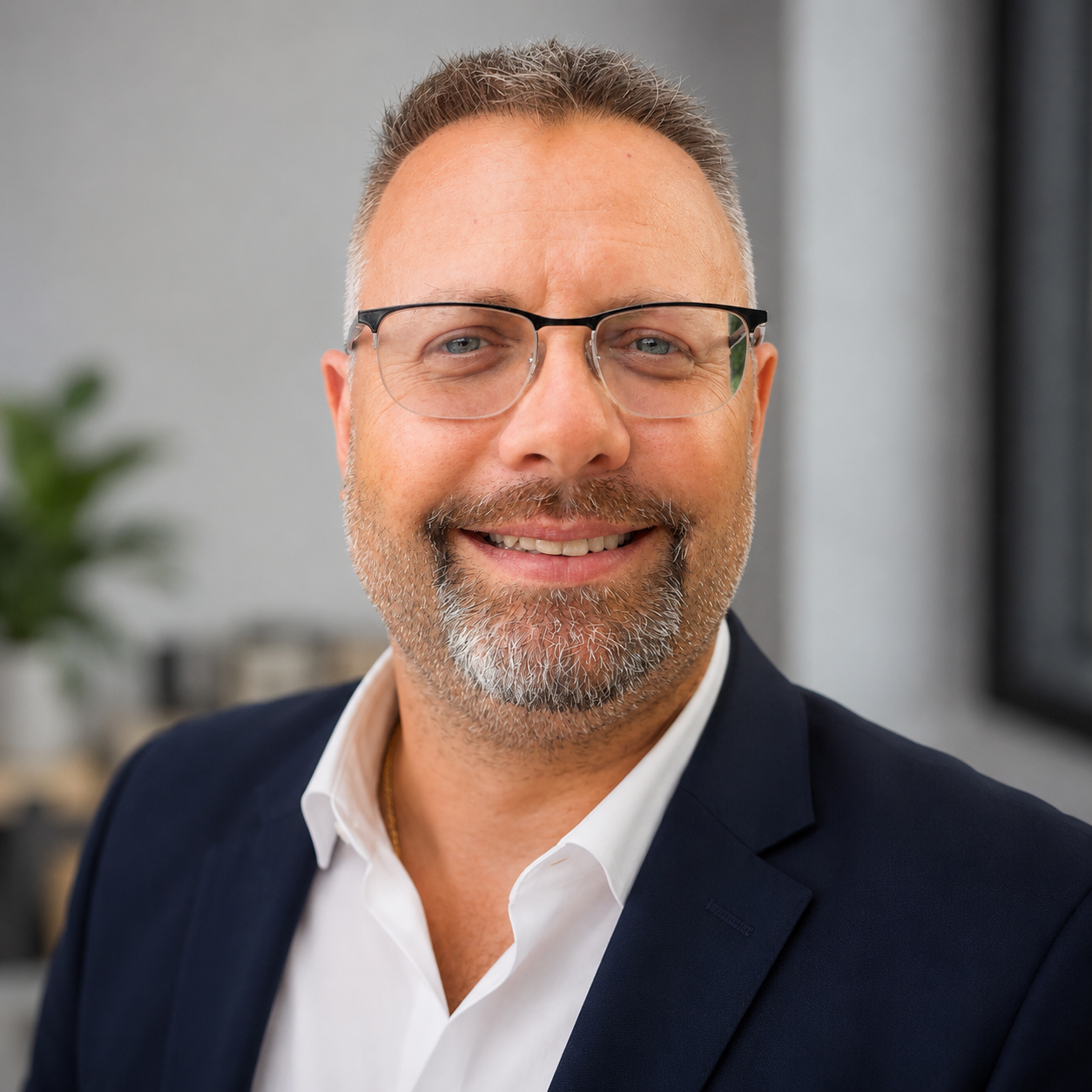
Article by
Delyan TZONEV
Passionate entrepreneur and manager, I am CEO of Flux Group and Hype Swiss. I support companies in their digital transformation thanks to innovative solutions in IT, telecommunications and software development. My goal is to design high-performance technologies that simplify the daily lives of businesses and support their growth.
Disclaimer
The articles published on the Flux Group blog aim to share our expertise, our field experience and best practices in IT, cybersecurity, cloud, telecommunications and digital transformation of SMEs.
We strive to provide reliable, up-to-date and relevant information at the time of publication. However, technologies, regulations and service offerings are evolving rapidly. The published content is therefore provided for informational purposes and does not constitute personalized, legal, tax, financial or technical advice.
Each company has specific needs, we recommend that you seek professional support before making a decision or implementing a solution presented in our articles.
The opinions, recommendations and comparisons published on this blog reflect our analysis and experience. When we talk about partners or publishers such as Microsoft, Swisscom or Infomaniak, our objective is to present the solutions objectively, highlighting their advantages as well as their limitations according to the different contexts of use.
Flux Group cannot be held responsible for any direct or indirect consequences resulting from the use of the information published on this blog. Links to external sites are provided to complete the information; their content is the responsibility of their respective publishers.
© Flux Group – All rights reserved.
Our services
If you wish to be supported in the choice, deployment or optimization of your IT solutions, the Flux Group experts are at your disposal. We support SMEs in Geneva, Switzerland and Pays de Gex in their Microsoft 365, cybersecurity, cloud, telecommunications, managed IT services and IT infrastructure projects.
Questions fréquentes
What are the digital assets most often targeted in Switzerland?
Customer data subject to FADP, intellectual property and unified communications systems are the priority targets. In Switzerland, attackers are increasingly targeting dematerialized financial assets and industrial manufacturing secrets. The paralysis of these essential elements allows cybercriminals to demand high ransoms, knowing that business interruption is extremely costly for Swiss SMEs in terms of production and credibility.
Does the Swiss data protection law (FADP) impose specific measures?
The FADP requires the implementation of appropriate technical and organizational measures to guarantee the security of personal data processed by your company. This includes rigorous access management, encryption and protection against unauthorized or accidental processing. Failure to comply with these obligations exposes the company to heavy criminal and civil penalties, making digital asset protection essential to remain in compliance with the federal legal framework.
What is the difference between a classic backup and a geosynchronous backup?
A typical backup is often static and stored on a single site, making it vulnerable to physical disasters or local ransomware. Geosynchronous backup replicates your data in real time across multiple secure data centers located in Switzerland simultaneously. This approach ensures maximum resilience. If a site becomes unavailable, your assets remain accessible without major interruption, ensuring smooth business continuity for your users.
How much does losing access to digital assets really cost for an SME?
The cost of an incident far exceeds the amount of a possible ransom or technical repair costs. It encompasses direct revenue loss during downtime, restoration costs and lasting damage to brand reputation. For an SME with seventy employees, a total paralysis can lead to financial losses amounting to tens of thousands of francs per day, directly threatening the sustainability of the structure.
Can you protect your digital assets without impacting employee productivity?
Effective protection must be invisible and seamless for the end user so as not to slow down operations. By integrating proactive monitoring tools and modern multi-factor authentication solutions, you secure your workflows without slowing down daily business processes. The objective is to transform security into a technological automation rather than a manual constraint, allowing your employees to work with complete peace of mind.
Why choose a local service provider in Geneva rather than an international cloud solution?
Choosing a partner in Geneva guarantees total sovereignty of your data and strict compliance with Swiss law. Unlike international giants, a local service provider offers immediate responsiveness and technical support that understands your specific territorial issues. You benefit from a robust and secure infrastructure while maintaining a single contact capable of physically intervening in your premises for tailor-made and rigorous support.
Besoin d'un accompagnement IT à Genève ?
Parlons de votre infrastructure, de votre sécurité ou de votre téléphonie. Sans engagement.
Contacter Flux Group