
Meta description: Optimize your Swiss SME cybersecurity budget in 2026. Protect your business from ransomware and ensure your revised FADP compliance with our expert advice.
Slug: budget-cybersecurity-SME-Switzerland-guide-2026
In 2026, ransomware cyberattacks against Swiss structures jumped by fifty-two percent, with average financial losses reaching eighty-four thousand francs for a single intrusion. Faced with this escalation, establish a Swiss SME cybersecurity budget is no longer an accounting option, but a vital necessity to guarantee the continuity of your activities. You are undoubtedly facing the pressure of revised FADP and the complexity of recruiting specialists in Geneva or in the Pays de Gex, challenges which require a structured and reassuring response.
We understand your need for visibility and control over these technological issues. This guide offers you a rigorous framework for allocating your financial resources with surgical efficiency, transforming your expenses into a strategic investment for your resilience. You will discover how to secure your data while respecting federal standards, thus ensuring complete peace of mind for your management and your employees. Here are the key steps to building a solid and lasting infrastructure in Switzerland.
Key Points
- Understand why cybersecurity must evolve from a simple cost center to a strategic investment essential for the sustainability of your business in 2026.
- Learn how to accurately calculate your Swiss SME cybersecurity budget using proven industry ratios and assessing the value of your critical digital assets.
- Compare the financial reality of internal technical recruitment in Geneva against the economic and operational advantages of managed services (MSSP).
- Identify the investment priorities needed to ensure full revised FADP compliance and build resilience with geosynchronous backups.
- Discover how Flux Defense's integrated approach allows you to benefit from high-level proactive protection while maintaining total control of your operating costs.
Table of Contents
- Why the cybersecurity budget is a strategic priority in Switzerland
- How to calculate your cybersecurity budget: Framework and criteria
- Investment Models: Internal Management vs Managed Services
- Optimize the budget: Priorities and compliance revised FADP
- The Flux Defense approach: Maximum security and controlled costs
Why the cybersecurity budget is a strategic priority in Switzerland
Invest in a Swiss SME cybersecurity budget goes far beyond the acquisition of simple antivirus software. This is a global approach aimed at protecting Principles of information security : the confidentiality, integrity and availability of your data. For a manager in Geneva or Meyrin, this budget line represents an insurance policy for the sustainability of the company. In 2026, inaction is costly. While a ransomware attack costs an SME eighty-four thousand francs on average, the cost of prevention remains much lower and, above all, predictable.
The trust of your Swiss partners constitutes a precious intangible asset. A major security incident is not limited to a technical shutdown; it permanently erodes your reputation with your customers in Vernier or Grand-Lancy. By integrating security from the planning phase, you transform a technical constraint into proof of operational reliability. This reassuring approach helps stabilize your business relationships in an increasingly unstable digital environment.
Cybersecurity as a lever for competitiveness
IT security has become an exclusion criterion in public and private calls for tenders in Switzerland. Clients are now demanding concrete guarantees on the protection of data flows. A robust infrastructure also allows you to negotiate your cyber insurance premiums down. Insurers favor companies that adopt a proactive posture. Promoting your technological investments in your customer communication becomes a major selling point. You can discover all of our services to understand how to align your infrastructure with these market requirements.
Realities of the Swiss market in 2026
The threat landscape has radically evolved. In 2026, ransomware attacks targeting Swiss SMEs jumped by fifty-two percent, with four hundred and seventy-four confirmed incidents. Cybercriminals have become professional, using artificial intelligence to carry out ultra-targeted fraud campaigns on the local economic fabric. Statistics show that seventy percent of attacked businesses suffer critical damage, ranging from complete data loss to prolonged production shutdown. This observation highlights the urgency of allocating Swiss SME cybersecurity budget consistent with the real risks in Petit-Lancy or Cologny.
How to calculate your cybersecurity budget: Framework and criteria
Determine a Swiss SME cybersecurity budget coherent requires a methodical approach, far from rough estimates. Gone are the days when security was just a neglected subcategory of IT. Today, Swiss standards suggest allocating between ten and fifteen percent of your overall IT budget to data protection. For Geneva companies operating in sensitive sectors such as finance or health, this ratio can reach twenty percent in order to guarantee total imperviousness in the face of persistent threats.
The calculation must begin with a rigorous assessment of the value of your critical digital assets. What are the systems whose shutdown would paralyze your activity in Meyrin or Vernier? Identify your ERP, customer databases and intellectual property. The potential cost of prolonged downtime should serve as the basis for your preventative investment. It is also crucial to integrate hidden costs, often overlooked during initial planning: time dedicated to training your employees, regular compliance audits and proactive maintenance of defense equipment.
The pillars of budget allocation
A balanced financial strategy is based on three priority investment areas. Infrastructure and network protection is the first line of defense, including next-generation firewalls and intrusion detection. Next comes identity and access management (IAM), essential for controlling who accesses what within your organization. Finally, securing hybrid work has become an absolute priority for SMEs whose employees alternate between their offices in Carouge and their homes in Pays de Gex, requiring highly secure remote access solutions.
Adjustment factors for SMEs
Several variables specific to your structure will influence the final envelope. The size of your company and the number of employees determine the volume of licenses required, but the complexity of your infrastructure plays an equally determining role. A hybrid environment, mixing local servers and cloud services like Microsoft 365, requires finer monitoring than a monolithic installation. Your resilience requirements, expressed by RTO (disaster recovery time) and RPO (maximum tolerated data loss), dictate the level of sophistication of the backup solutions to implement.
To transform these theoretical criteria into a budget strategy adapted to your objectives, a personalized assessment of your infrastructure will help identify priority optimization levers for your business.
Investment Models: Internal Management vs Managed Services
Choosing between recruiting a dedicated team and managed IT services is a pivotal step in stabilizing your Swiss SME cybersecurity budget. For a company based in Geneva or Nyon, the real cost of an internal security expert often exceeds one hundred and fifty thousand francs per year, social charges included. Added to this amount are continuing training costs, which are essential to keep up with the rapid evolution of threats. For many structures, this financial burden becomes difficult to sustain in the long term, especially when constant monitoring must be guaranteed.
The managed services alternative (MSSP) radically transforms your financial approach. By moving from a CAPEX model, based on heavy investments in equipment and licenses, to an OPEX model, you benefit from predictable operational costs. Managed services allow you to pool cutting-edge tools and technical expertise. This gives you access to incident detection and response technologies (EDR/MDR) normally reserved for large multinationals, without bearing the full acquisition costs. It's an agile protection strategy that adapts to the growth of your SME without requiring massive hiring.
The challenge of IT recruitment in Geneva
The Lake Geneva region is experiencing an unprecedented talent shortage in the digital sector. This scarcity generates wage inflation which weighs heavily on the budgets of SMEs in Switzerland. Beyond salary, the operational risk is major: the departure of a key employee can leave your infrastructure vulnerable for several months. Keeping skills current requires an investment of time and money that few leaders can afford to neglect. Outsourcing this vigilance to a local partner allows you to overcome these complex human management constraints.
The profitability of managed services
The strength of managed services lies in budgetary predictability. Thanks to fixed monthly subscriptions, you smooth out your expenses and avoid unpleasant financial surprises. A local partner offers IT support in Geneva capable of intervening with surgical responsiveness in the event of an alert. This pooling of security monitoring ensures proactive protection twenty-four hours a day. You benefit from an optimized infrastructure and absolute peace of mind. To explore how these solutions fit into your structure, check out our services specialized for Swiss SMEs.
Optimize the budget: Priorities and compliance revised FADP
Optimize your Swiss SME cybersecurity budget requires surgical prioritization of investments. It's not about spending more, but about spending better by targeting the vulnerabilities that could paralyze your business in Geneva or Lancy. This approach begins with a detailed understanding of your legal obligations and technical resilience solutions. In 2026, compliance is no longer a peripheral cost, it becomes the foundation of your defense strategy.
The security audit is the essential preliminary step. It allows you to identify real flaws in your infrastructure before committing funds. Blindly investing in software solutions without prior diagnosis is a common mistake that unnecessarily strains resources. A rigorous audit directs your decisions towards the most critical assets, guaranteeing optimal return on investment for your protection.
revised FADP as an investment framework
The new Federal Data Protection Act (revised FADP) imposes high security standards. Since September 2023, managers of Swiss SMEs have been personally responsible for the security of the data processed. Fines can reach two hundred and fifty thousand francs in the event of intentional violation of duties of care. Allocating part of your budget to data governance and process documentation is therefore a top priority. To explore these issues in more detail, consult our guide on Cybersecurity Swiss company.
Backup and business continuity
Ransomware resilience relies on a robust backup strategy. While an attack costs an SME on average eighty-four thousand francs, the implementation of geosynchronous backups represents an economical and effective defense. This technology ensures geographic replication of your data on Swiss territory, guaranteeing their integrity even in the event of a major local disaster in Carouge or Meyrin. Data sovereignty, via partners like Infomaniak or Swisscom, reinforces this security. Discover the implementation methods in our article on Geosynchronous data backup.
Finally, don't forget the human factor. Raising awareness among your employees often offers the best cost-effectiveness ratio. A team trained to detect phishing attempts drastically reduces your company's attack surface, thus complementing your technical investments with a culture of shared vigilance.
The Flux Defense approach: Maximum security and controlled costs
Flux Defense positions itself as the modern bulwark of businesses in the region. Our approach is based on proactive protection that adapts precisely to the reality of your structure. By natively integrating security into your infrastructure; we enable efficient rationalization of your Swiss SME cybersecurity budget. This synergy between Flux ICT and Flux Defense eliminates technological redundancies and communication gaps. Flux Group SARL gives you total visibility into your investments while strengthening your overall defense posture.
Our Swiss technical expertise transforms the complexity of cybersecurity into seamless management. We support decision-makers from Meyrin to Vernier to develop tailor-made strategies. This geographical proximity guarantees essential responsiveness in the event of a critical incident. By centralizing your needs with a single partner; you reduce operational costs linked to the multiplication of licenses. It is a rigorous method that favors operational efficiency over unnecessary complexity.
Your local strategic partner
Flux Group SARL acts as a natural, invisible extension of your internal team. We are your single point of contact for IT, VoIP telephony and security. This global vision allows you to optimize each segment of your network, from Eaux-Vives to Cologny, including Grand-Lancy and Petit-Lancy. Our knowledge of the local economic fabric allows us to anticipate specific threats targeting businesses in Geneva. To discover the extent of our support, consult our presentation of Flux ICT.
Taking action in 2026
Securing your business begins with an uncompromising inventory. Performing an initial audit is the only way to identify priority vulnerabilities without wasting your resources. Once this diagnosis has been established; we help you plan your investments over the next twelve months in a methodical manner. This step-by-step approach guarantees an increase in your security while respecting your financial constraints. Don't let uncertainty dictate your digital strategy. Request an audit of your cybersecurity budget today to transform your defense into a sustainable competitive advantage.
Anticipating 2026: Towards sustainable digital serenity
The definition of a Swiss SME cybersecurity budget coherent is no longer a simple technical formality, but a strong managerial act to guarantee the sustainability of your activities. By opting for a strategic approach, you move from a reactive posture to a proactive defense. Managed IT services via managed services makes it possible to circumvent recruitment difficulties in Geneva while benefiting from cutting-edge expertise. This pooling of resources ensures optimal protection without weighing heavily on your cash flow.
Complying with revised FADP and adopting geosynchronous backups are your best assets against ransomware threats. Flux Group supports you with local Geneva expertise and certified solutions, guaranteeing total resilience of your infrastructure. Our technical support remains available to monitor your data seven days a week. Together, we transform your technological challenges into a promise of stability for the future of your business in Switzerland.
Frequently asked questions about cyber budget management
What is the average percentage of the IT budget dedicated to cybersecurity in Switzerland?
The average percentage recommended for a Swiss SME cybersecurity budget is between ten and fifteen percent of the overall IT envelope. This ratio is adjusted according to the criticality of your data and your location in Meyrin or Petit-Lancy. Geneva companies dealing with sensitive flows tend towards twenty percent. This allocation covers the defense tools and proactive monitoring needed to counter today's threats without compromising your operational agility.
Does revised FADP require specific technological investments for SMEs?
The revised FADP does not dictate the purchase of specific software, but it requires appropriate technical measures to ensure data protection by design (Privacy by Design). This often involves investing in encryption, rigorous access management and logging systems. The objective is to prove your ability to protect personal information, transforming legal compliance into an essential security standard for any structure operating on the Swiss market.
Is it more profitable to outsource your cybersecurity to Geneva?
Managed IT services in Geneva is strategic because it allows you to overcome recruitment constraints in a saturated market. By delegating your security, you benefit from a shared operations center (SOC), reducing costs compared to an internal team. For an SME located in Vernier or Eaux-Vives, this solution offers immediate access to advanced detection technologies. You thus transform heavy investments into controlled and predictable monthly expenses.
How to justify a cybersecurity budget to your management?
The justification is based on the demonstration of the return on investment (ROI) linked to risk prevention. Present cybersecurity as an insurance policy that protects against massive business losses following an attack. Also emphasize that revised FADP compliance is a selling point with your Geneva partners. By securing your assets, you protect the company's reputation and avoid heavy financial penalties under current federal law.
What are the three priority investments for a small SME?
For a small structure in Meyrin or Grand-Lancy, the priorities are multi-factor authentication (MFA), immutable backups and training. The MFA blocks the majority of intrusions linked to credential theft. A geosynchronous backup guarantees the recovery of your data after a major incident. Finally, raising awareness among your employees constitutes the essential human barrier for a Swiss SME cybersecurity budget optimized. These three pillars provide effective protection with a reasonable initial investment.
Does the cybersecurity budget reduce the cost of cyber insurance?
A secure infrastructure is a major lever for negotiating your insurance premiums down. Swiss insurers now carry out in-depth audits before granting cover. By demonstrating the existence of an incident response plan and active protection measures, you drastically reduce your risk profile. This not only provides access to better contractual conditions, but also limits deductibles in the event of a major IT disaster within your SME.
What is the cost difference between classic backup and geosynchronous backup?
Conventional backup is often limited to a delocalized copy, while geosynchronous backup ensures real-time replication on several Swiss sites. This architecture guarantees total data sovereignty, in accordance with the requirements of revised FADP. Although the investment is slightly higher, the drastically reduced recovery time (RTO) protects your SME against massive financial losses. This is the assurance of absolute business continuity, even in the event of a major local disaster in Geneva.
Article by
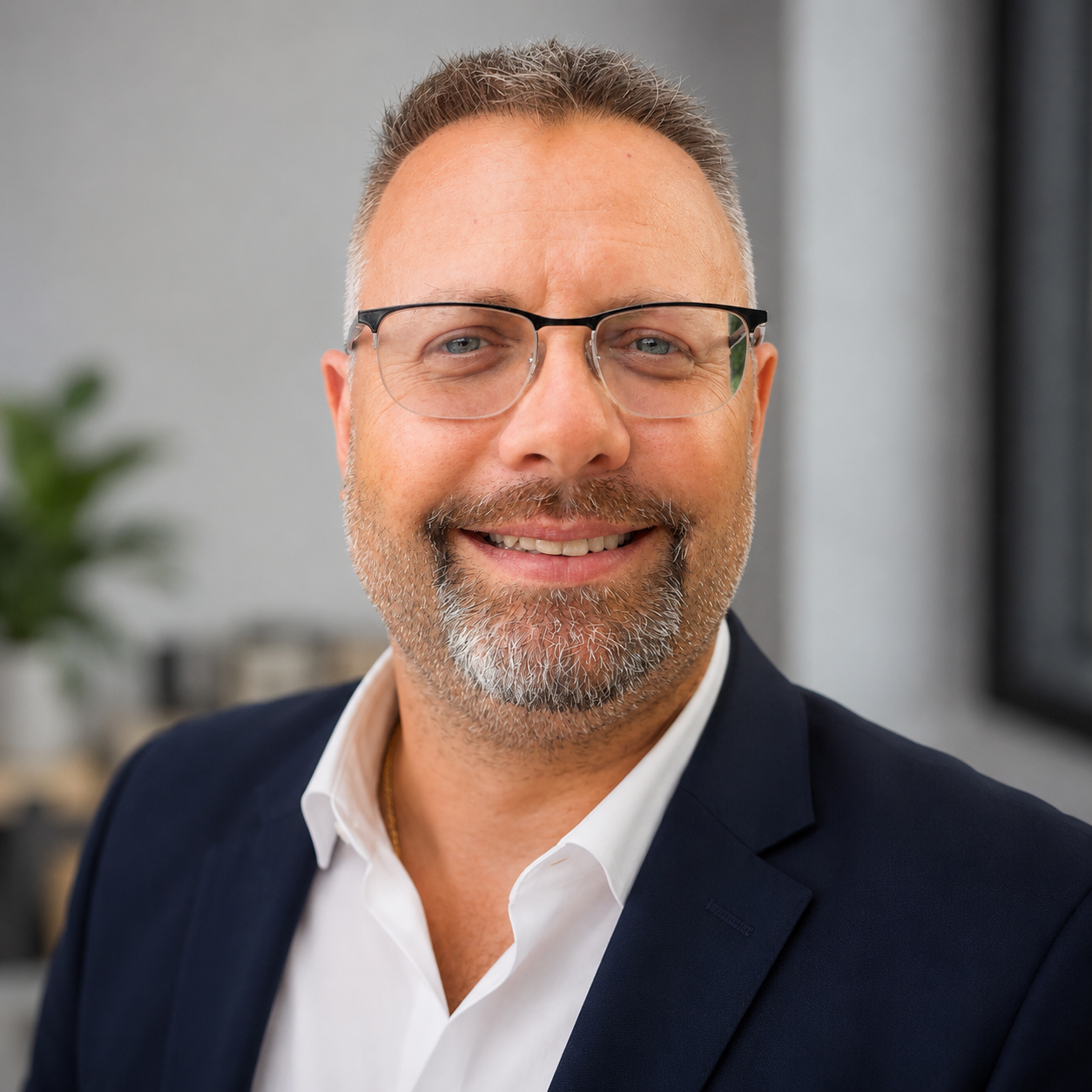
Delyan TZONEV
Passionate entrepreneur and manager, I am CEO of Flux Group and Hype Swiss. I support companies in their digital transformation thanks to innovative solutions in IT, telecommunications and software development. My goal is to design high-performance technologies that simplify the daily lives of businesses and support their growth.
Disclaimer
The articles published on the Flux Group blog aim to share our expertise, our field experience and best practices in IT, cybersecurity, cloud, telecommunications and digital transformation of SMEs.
We strive to provide reliable, up-to-date and relevant information at the time of publication. However, technologies, regulations and service offerings are evolving rapidly. The published content is therefore provided for informational purposes and does not constitute personalized, legal, tax, financial or technical advice.
Each company has specific needs, we recommend that you seek professional support before making a decision or implementing a solution presented in our articles.
The opinions, recommendations and comparisons published on this blog reflect our analysis and experience. When we talk about partners or publishers such as Microsoft, Swisscom or Infomaniak, our objective is to present the solutions objectively, highlighting their advantages as well as their limitations according to the different contexts of use.
Flux Group cannot be held responsible for the direct or indirect consequences resulting from the use of the information published on this blog. Links to external sites are provided to complete the information; their content is the responsibility of their respective publishers.
© Flux Group – All rights reserved.
Our services
If you wish to be supported in the choice, deployment or optimization of your IT solutions, the Flux Group experts are at your disposal. We support SMEs in Geneva, Switzerland and Pays de Gex in their Microsoft 365, cybersecurity, cloud, telecommunications, managed IT services and IT infrastructure projects.
Questions fréquentes
What is the average percentage of the IT budget dedicated to cybersecurity in Switzerland?
The average percentage recommended for a Swiss SME cybersecurity budget is between ten and fifteen percent of the overall IT envelope. This ratio is adjusted according to the criticality of your data and your location in Meyrin or Petit-Lancy. Geneva companies dealing with sensitive flows tend towards twenty percent. This allocation covers the defense tools and proactive monitoring needed to counter today's threats without compromising your operational agility.
Does revised FADP require specific technological investments for SMEs?
The revised FADP does not dictate the purchase of specific software, but it requires appropriate technical measures to ensure data protection by design (Privacy by Design). This often involves investing in encryption, rigorous access management and logging systems. The objective is to prove your ability to protect personal information, transforming legal compliance into an essential security standard for any structure operating on the Swiss market.
Is it more profitable to outsource your cybersecurity to Geneva?
Managed IT services in Geneva is strategic because it allows you to overcome recruitment constraints in a saturated market. By delegating your security, you benefit from a shared operations center (SOC), reducing costs compared to an internal team. For an SME located in Vernier or Eaux-Vives, this solution offers immediate access to advanced detection technologies. You thus transform heavy investments into controlled and predictable monthly expenses.
How to justify a cybersecurity budget to your management?
The justification is based on the demonstration of the return on investment (ROI) linked to risk prevention. Present cybersecurity as an insurance policy that protects against massive business losses following an attack. Also emphasize that revised FADP compliance is a selling point with your Geneva partners. By securing your assets, you protect the company's reputation and avoid heavy financial penalties under current federal law.
What are the three priority investments for a small SME?
For a small structure in Meyrin or Grand-Lancy, the priorities are multi-factor authentication (MFA), immutable backups and training. The MFA blocks the majority of intrusions linked to credential theft. A geosynchronous backup guarantees the recovery of your data after a major incident. Finally, raising awareness among your employees constitutes the essential human barrier for an optimized Swiss SME cybersecurity budget. These three pillars provide effective protection with a reasonable initial investment.
Does the cybersecurity budget reduce the cost of cyber insurance?
A secure infrastructure is a major lever for negotiating your insurance premiums down. Swiss insurers now carry out in-depth audits before granting cover. By demonstrating the existence of an incident response plan and active protection measures, you drastically reduce your risk profile. This not only provides access to better contractual conditions, but also limits deductibles in the event of a major IT disaster within your SME.
What is the cost difference between classic backup and geosynchronous backup?
Conventional backup is often limited to a delocalized copy, while geosynchronous backup ensures real-time replication on several Swiss sites. This architecture guarantees total data sovereignty, in accordance with the requirements of revised FADP. Although the investment is slightly higher, the drastically reduced recovery time (RTO) protects your SME against massive financial losses. This is the assurance of absolute business continuity, even in the event of a major local disaster in Geneva.
Besoin d'un accompagnement IT à Genève ?
Parlons de votre infrastructure, de votre sécurité ou de votre téléphonie. Sans engagement.
Contacter Flux Group